
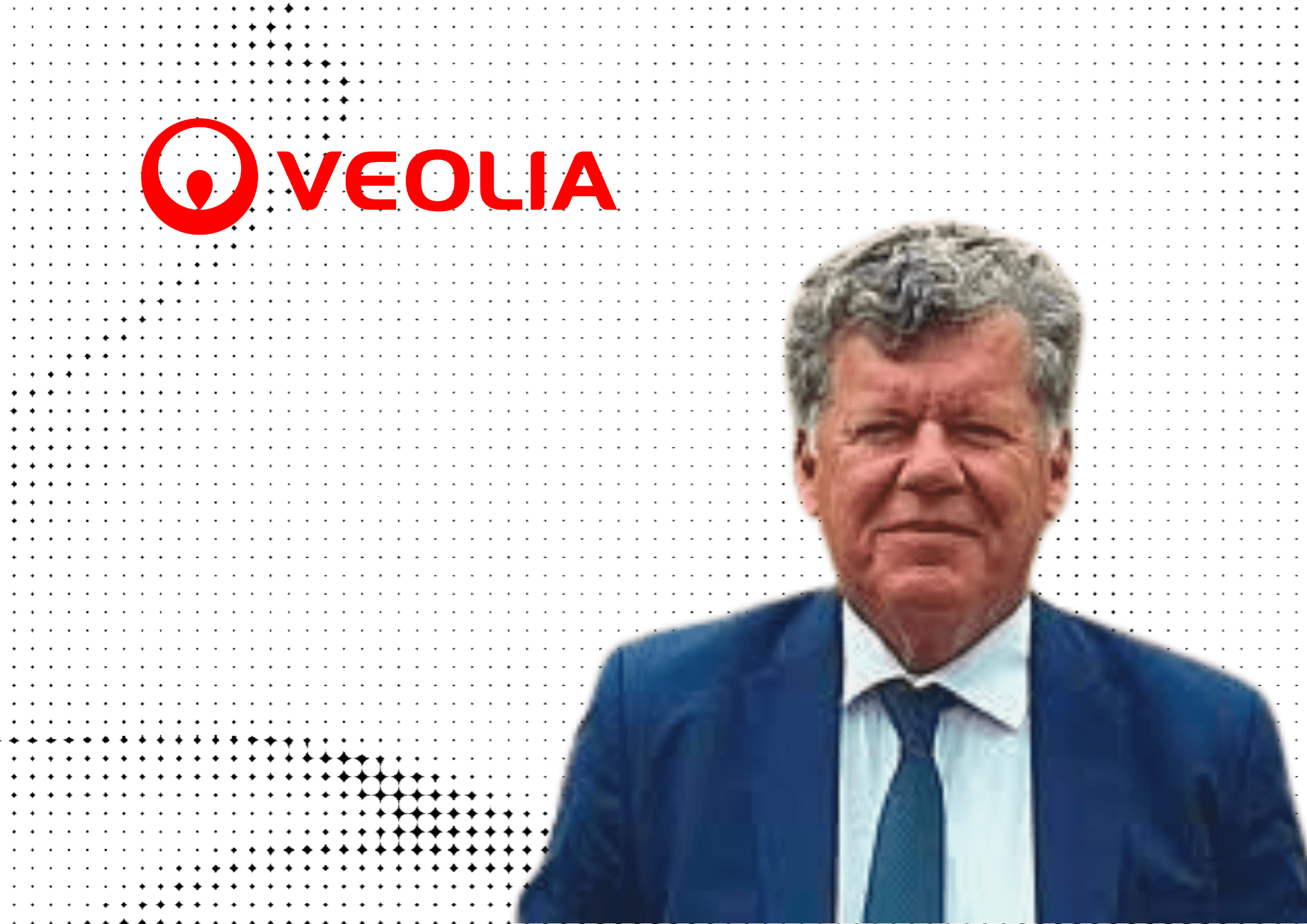
Introduction: 20 years of M&A at the helm of human resources
Jean-Marie Lambert, former HR Director of Veolia for more than 20 years, participated in 9 merger and acquisition (M&A) transactions. Before that, he had already gained strong experience as HR Director at Vinci Construction. In this article, he shares key lessons from these experiences, with a particular focus on managing corporate cultures in often complex contexts.
Corporate culture according to Jean-Marie Lambert
Jean-Marie Lambert describes corporate culture as the way employees interact, work together, and approach clients. According to him, although it often relies on implicit elements, a culture can be formalized, which is crucial in the context of an M&A.
Key dimensions influencing corporate culture
During his experiences, Jean-Marie Lambert identified several dimensions that shape culture and influence its compatibility in an M&A:
Employee shareholding: The portion of the company owned by employees.
Relationship to technique and expertise: The central (or not) role of technique in the activity.
Relationship to profit: What level of importance is attributed to financial results?
Client relationships: The nature of the clients and how to approach them.
Interactions between support and operational functions: Fluidity and frequency of exchanges.
Social policy: Social dialogue, salaries, training, career advancement.
Internal social relations: Proximity or distance between employees.
Recruitment criteria: Favored profiles (internships, apprenticeships, international contracts).
Compensation policy and employee benefits: Structure of salaries and benefits.
Leadership example: Influence of leaders on teams.
Diversity and feminization of management: Level of inclusion of women and minorities.
"Corporate culture is a sum of small details that, together, profoundly influence compatibility between two entities."
The due diligence phase in an M&A
Identifying key leaders
According to Jean-Marie Lambert, the composition of the management is the first factor to analyze in an M&A transaction. The questions to ask are as follows:
What are the profiles of the leaders?
How do they manage their teams?
What are their leadership styles?
Anticipating power dynamics
The type of merger directly influences the dynamics between the companies involved. Jean-Marie Lambert distinguishes several scenarios:
Friendly mergers: Collaboration is generally smooth, provided there is good communication about the future of the teams.
Unfriendly mergers: Tensions and resistance can complicate integration.
Mergers within a group: Paradoxically, these can be the most difficult due to historical rivalries.
Ensuring good conditions for the acquired entity
In an international context, it is crucial to ensure favorable conditions for the acquired company, for example:
Maintaining a local management.
Offering a training plan for the leaders of the integrated entity.
PMI (Post-Merger Integration) strategy
Create a common culture or preserve existing cultures?
According to Jean-Marie Lambert, two approaches can be considered:
Create a common culture: This option requires careful balance of the leadership teams to avoid any perception of unfairness.
Temporarily coexist: If this path is chosen, it is essential to justify why coexistence is beneficial in the short term.
Managing managers as a priority
The first source of cultural dissonance after a merger often comes from managers. If changes are necessary, they must be made quickly to avoid disrupting the teams.
Engaging teams in cultural evolution
A transparent and regular communication
Jean-Marie Lambert emphasizes the importance of communication in a successful M&A. However, he notes that methods have evolved:
Before 2010: Communication was managed internally by the Executive Committee, with on-site visits and direct exchanges with employees.
Since 2010: External agencies play a major role, but overly formatted speeches can sometimes erode employees' trust.
"The communication scenario must be designed to reassure teams while highlighting the opportunities created by the merger."
Jean-Marie Lambert's advice for a successful M&A
Consider the symbolism of appointments
"The choice of directors is a strong signal. It shows the acquired company's teams whether they are valued or not."
Take time to analyze cultures
Evaluate cultural gaps from the due diligence phase to anticipate challenges.
Ensure that cultural integration is not underestimated in the action plan.
Maintaining a balance between continuity and change
Adapt certain elements of the acquired company's culture, but avoid overwhelming immediate changes.
Identify what can be enriched by the culture of the integrated entity.
FAQ on cultural management in M&A
Why is corporate culture essential in an M&A?
Corporate culture directly influences employee engagement, the fluidity of interactions, and the success of synergies.
What are the signs of cultural incompatibility?
Opposing visions on client management or talent management.
An incompatible social or salary policy.
Divergences in management styles.
How to engage teams in a new post-M&A culture?
Favor authentic and transparent communication.
Create opportunities for collaboration between teams to foster experience-based buy-in.
Key takeaways
Culture is central in an M&A: it must be studied from the due diligence phase.
Managerial appointments are strategic: they influence employee perceptions.
Communication must be authentic: avoid overly formatted speeches to maintain trust.
Conclusion
Managing culture in an M&A is a delicate art that requires in-depth analysis and balanced decisions. Jean-Marie Lambert's insights show that successful integration relies on a clear vision and strong commitment from leaders to preserve what makes each entity rich.
Subscribe to our newsletter for more advice on leadership and cultural transformation.